Metal vs Shingle Roofs in Tornado Alley
March 10, 2026 · 10 min read · Aero Precision Roofing
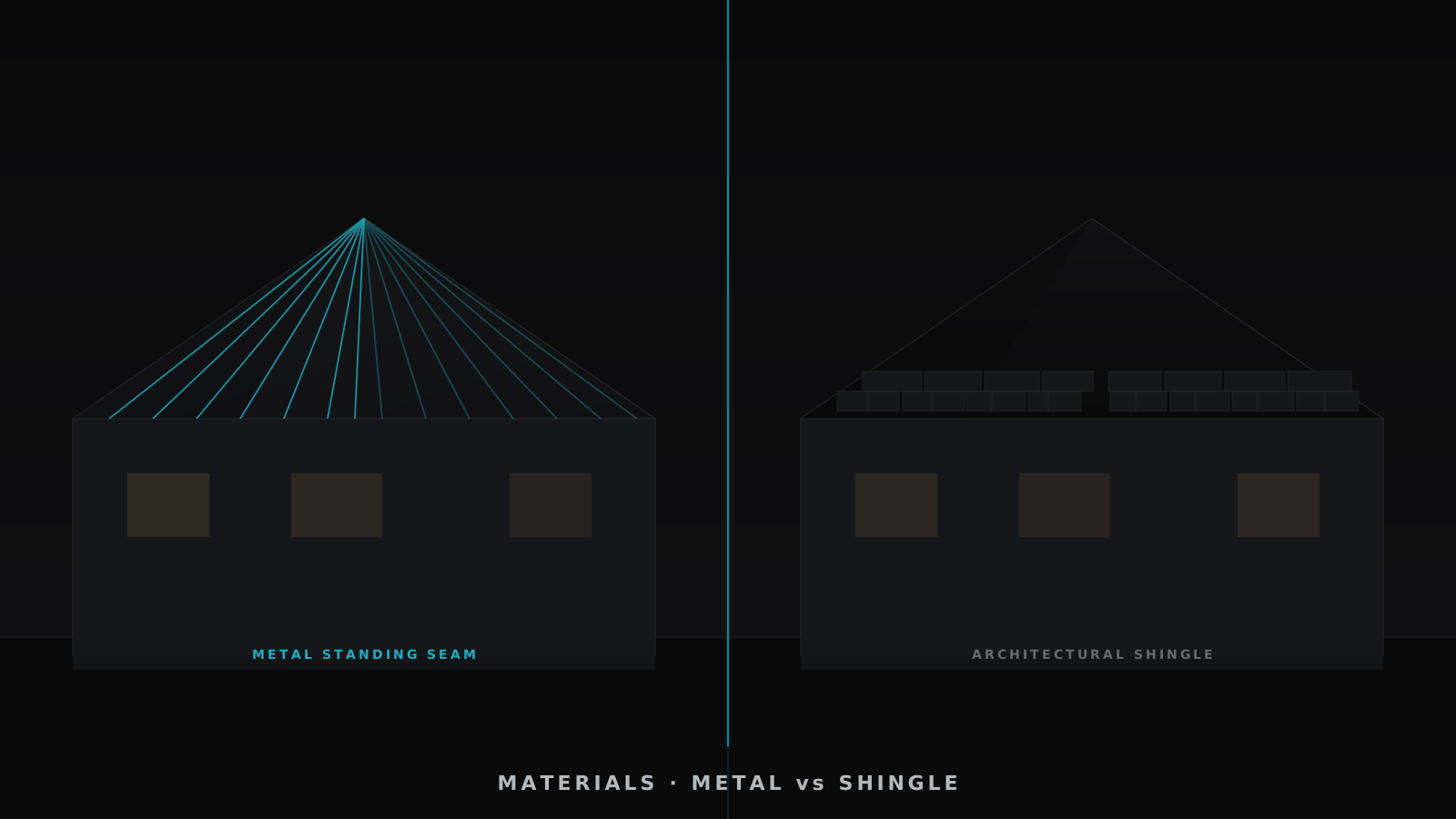
Most Oklahoma homeowners replace asphalt shingles on a 15-to-20-year cycle. A few of them are on their third replacement on the same house. At some point, the comparison stops being “metal vs shingles” and starts being “one more shingle cycle vs done for the next 50 years.” That framing changes how the numbers land.
This is not a pitch for metal. Some houses are genuinely better served by architectural shingles — the cost difference is real, the aesthetic fit matters, and not every roof geometry or budget works for a standing seam system. What follows is a direct comparison so you can make an informed call.
Cost: What You Actually Pay Over Time
The upfront gap between metal and asphalt is significant. For a typical 2,000-square-foot Tulsa home, a standing seam metal roof runs roughly 2x to 3x the installed cost of a quality architectural shingle system. On numbers, that can mean the difference between $12,000–$16,000 for a shingle replacement and $28,000–$40,000 for standing seam.
That gap narrows when you factor in:
- Lifespan: Standing seam lasts 40–70 years. A good architectural shingle in Oklahoma lasts 15–25 years before hail, UV, and temperature cycling cause functional degradation. Over 50 years, you’re comparing one metal roof to two or three shingle replacements.
- Insurance premium discounts: Class 4 impact-rated metal panels earn a discount from most major Oklahoma carriers. That discount varies — ask your agent specifically — but figures in the 20–30% range on the wind/hail portion of your premium are common. Over 10 years, that alone can recover a significant portion of the metal upgrade cost.
- Maintenance: Properly installed metal roofing requires almost no maintenance. Asphalt requires periodic re-inspection, spot repairs around pipe boots and flashings, and granule monitoring.
For homeowners where the upfront gap is the sticking point, financing options can spread the cost of a metal system over a period that makes the monthly comparison against shingle replacement more palatable.
Performance in Oklahoma’s Climate
Oklahoma does not have a gentle climate. The Tulsa metro averages one to three significant hail events per year. Spring and fall storm systems bring wind gusts that regularly hit 60-plus mph. Summer UV exposure is intense. No roofing material performs equally well across all of those stressors.
Metal roofing performance:
- Wind rating: Standing seam panels with concealed fasteners are tested to 140+ mph wind speeds on most manufacturers’ systems. Exposed-fastener R-panel is rated lower, typically 90–110 mph, due to the potential for fastener pullout at panel edges.
- Hail rating: Class 4 is the highest UL 2218 impact rating. Most 24-gauge standing seam and stone-coated steel products carry a Class 4 rating. Hail that cracks and granule-strips an asphalt shingle will leave a dent in metal — but a dent does not compromise the waterproofing or trigger a functional failure.
- Longevity under UV: Metal with a quality Kynar or PVDF coating retains its color and resists chalking far better than asphalt over Oklahoma’s summer sun.
Asphalt shingle performance:
- Wind rating: Dimensional architectural shingles carry a Class F or Class H wind rating (60–90 mph) when installed correctly with 6-nail patterns in high-wind zones. Below that, standard 4-nail installation is the norm — and 70-mph gusts have been known to find the tabs.
- Hail rating: Class 3 and Class 4 impact-resistant shingles exist and carry similar insurance discounts to metal. They’re more expensive than standard shingles but significantly cheaper than metal, and they look identical from the street.
- Longevity under UV: Granule loss accelerates UV degradation on asphalt. After a major hail event, a shingle that loses significant granule coverage on a south-facing slope can degrade in 5–7 years rather than 20.
Insurance Discounts and the Class 4 Question
Both metal and impact-rated shingles can qualify for a Class 4 discount. The conversation with your insurance agent is worth having before you choose materials.
What to ask:
- Does my current policy offer a wind/hail discount for Class 4 rated materials?
- What is the estimated dollar amount of that discount annually?
- Does the discount apply to the full premium or only the wind/hail endorsement?
- Is there a preferred material list, or does any UL 2218 Class 4 product qualify?
If the discount is 20% on a $3,000 annual premium, you’re looking at $600 per year — $6,000 over 10 years. That’s meaningful in the total-cost comparison. Our team can pull together the rating documentation for any product we install and submit it to your insurer as part of the insurance claims and documentation process.
Noise, Aesthetics, and Resale
These factors are subjective but worth naming plainly.
Noise: On a solid-decked residential roof with quality underlayment, metal is not noticeably louder than shingles during rain. The “metal roof sounds like a drum kit” experience comes from open-frame agricultural buildings with no insulation between the panel and the interior. On a conventionally framed home in Broken Arrow or Owasso, the difference is minimal. Open-frame barns and pole buildings are a different matter — see our guide on spray foam insulation for how to address that.
Aesthetics: Standing seam has a clean, contemporary look that suits modern and transitional architecture well. On a traditional Colonial or a Tudor Revival in an established Tulsa neighborhood, it can look out of place. Architectural shingles offer more profile variety and blend into established streetscapes more naturally. Stone-coated steel offers a middle path — Class 4 rated performance with a shingle or tile appearance.
Resale: Metal roofing consistently shows positive ROI in resale data, but the magnitude depends on the market. In suburban Tulsa, Jenks, or Bixby, a standing seam roof on a well-maintained home typically generates positive buyer interest. In rural areas with lower price-per-square-foot comps, the premium is harder to recapture fully. Neither material is a wrong choice for resale — the bigger factor is condition.
When Metal Makes More Sense
Choose metal over shingles when:
- You plan to stay in the house for 15 or more years (the math favors metal strongly on a long time horizon)
- You’ve filed two or more hail claims in the past decade and want out of that cycle
- Your insurer confirms a meaningful Class 4 discount that changes the total-cost comparison
- You have a simple roof geometry — metal performs best on clean gable and hip roofs with minimal penetrations
- You’re building new construction and can factor the cost difference into original financing
Our metal roofing service covers standing seam, R-panel, and stone-coated steel for residential properties across the region.
When Shingles Still Win
Choose architectural shingles when:
- Budget is a hard constraint and the upfront difference is not financeable
- You’re preparing to sell within 5 years and the ROI case for metal doesn’t hold in your specific market
- Your roof has a complex geometry with many penetrations, dormers, or steep transitions — metal installation is more labor-intensive on complex layouts, which widens the cost gap further
- You want a Class 4 impact-rated product without the full metal cost — impact-rated shingles from manufacturers like Owens Corning or CertainTeed cover this ground
- HOA or neighborhood character makes metal visually inappropriate
For standard shingle replacement in the Tulsa area, Stillwater, Bartlesville, or anywhere in our service area, our residential roofing team handles full tear-offs, deck inspections, and installations with a proper synthetic underlayment system — not the shortcuts that cause early failures.
Making the Decision
The honest answer is that both products work. The question is which one fits your specific situation. If you’re replacing a storm-damaged roof and filing an insurance claim, the conversation about upgrading to metal happens most naturally right then — the claim covers the cost of equivalent replacement, and you decide whether to add the upgrade cost out of pocket. That’s a decision worth having with numbers in front of you.
Request a free inspection and we’ll walk both options with you — installed cost, insurance implications, and an honest read on which material fits your house and your plans.