How Oklahoma Insurance Claims Actually Work After Hail
February 18, 2026 · 12 min read · Aero Precision Roofing
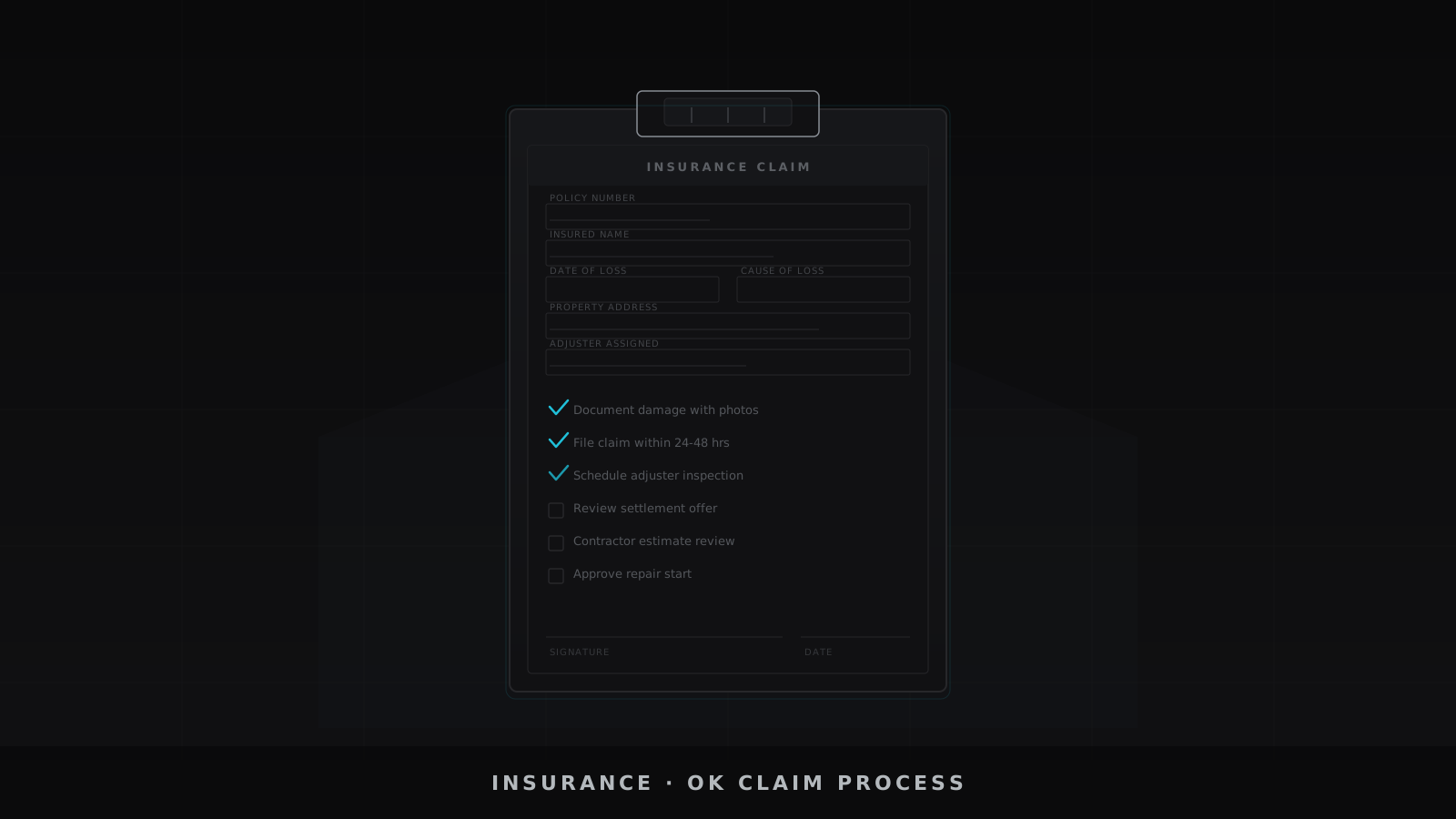
Most Oklahoma homeowners have filed at least one hail claim. A smaller number have filed several. A surprising percentage of them end up frustrated not because the claim was denied, but because they didn’t understand the process well enough to navigate it effectively. The result is either an underpaid claim that doesn’t cover the full scope of damage, or delays that let water entry worsen before repairs begin.
The process is not complicated once you understand the mechanics. Here is what actually happens from the moment you call your insurer to the moment your roofer gets paid.
Filing the Claim: What to Say and When
The claim window in Oklahoma for most homeowner policies is one year from the date of the storm event. That is not an invitation to delay — it is the outside limit. Claims filed within 30 days of a storm event face far less friction than those filed six months later, for a simple reason: adjusters can verify storm dates through weather service records, but the longer a roof sits damaged, the harder it becomes to separate storm damage from secondary water damage or general wear.
When you call to file, have ready:
- Your policy number
- The approximate storm date (National Weather Service records confirm hail events by zip code and date — your insurer will cross-reference these)
- A brief description of what you observed: granule accumulation in gutters, visible dents on HVAC equipment, any interior moisture
You do not need a contractor estimate to file. You do not need photos already organized. You are opening the claim and establishing the date of reported damage. The insurer will assign a claim number and schedule an adjuster visit, usually within 7–14 days after a major regional event. During periods of widespread storm activity — which describes most spring seasons across the Tulsa metro, Cleveland, and Bartlesville areas — that timeline can stretch. Your claim number is your date stamp. Get it quickly.
If you have active water entry while waiting for the adjuster, do not wait. Storm-driven emergency water mitigation is covered under most Oklahoma policies as a necessary protective measure. Our emergency tarping service secures open breaches immediately, documents the work with photos and a written report, and submits that documentation as a line item in the claim. You do not pay out of pocket for a covered storm event.
The Adjuster Visit: What They’re Measuring
The adjuster is an employee or independent contractor working for your insurer. Their job is to identify functional storm damage and assign a dollar value to restoring the property to pre-storm condition. They are not there to help you file a larger claim or to find damage you haven’t identified — they’re measuring what they find.
What they document on a typical roof inspection:
- Hail hit density per square (a square is 100 square feet of roofing) — most insurers require a minimum number of functional hits per square to justify replacement rather than repair
- Impact marks on soft metals (pipe boots, ridge caps, flashing, HVAC fins) — these confirm storm intensity and hail size
- Granule displacement patterns — random versus directional loss matters; directional loss suggests wind-driven damage rather than hail
- Ridge cap and hip cap condition, since these take direct perpendicular hits
- Siding, gutters, windows, and any other exterior surfaces in scope
What adjusters commonly miss on a fast walk:
- Pipe boot cracks and collar separation at the base of plumbing vents
- Rear and secondary slopes that require ladder access from the back of the house
- Fascia board hail strikes hidden under the gutter line
- Valley damage where impact hits concentrate at the junction of two planes
- Older damage on a second story that wasn’t visible from the eave line
Having a contractor on the roof with the adjuster is the single most effective thing you can do to close these gaps. We meet adjusters on-site for every claim we manage. When we find items the adjuster missed, we document them in real time and either add them to the scope during the visit or submit a supplement after. That supplement process is normal, legal, and a routine part of how claims are resolved in this region.
Understanding ACV vs. RCV: The Depreciation Equation
This distinction controls how much money you receive and when.
Actual Cash Value (ACV) means the insurer pays you the replacement cost minus depreciation. A 15-year-old roof with an expected lifespan of 20 years has, by one common calculation, been “used up” 75% of its life. An ACV payout on a $20,000 replacement might net you $5,000 after depreciation is deducted. That is not enough to replace the roof.
Replacement Cost Value (RCV) means the insurer pays the full cost to replace the damaged property with like-kind materials at current pricing. Most Oklahoma homeowner policies issued in the past decade are RCV policies. On an RCV policy, the claim is paid in two stages:
- Initial payment: The ACV amount, released when the claim is approved
- Recoverable depreciation: The withheld depreciation amount, released after the work is completed and you submit proof of completion to the insurer
This two-stage structure catches a lot of homeowners off guard. They receive the initial check, think the claim is resolved, and don’t follow up to recover the depreciation — which can be a significant portion of the total claim value. Always ask your adjuster: “Is this an ACV or RCV policy?” If it is RCV, ask: “What is the holdback amount and what documentation do I need to submit to recover it?”
The Deductible Math
Your deductible comes out of your pocket regardless of claim size. Most Oklahoma policies now carry a percentage deductible for wind and hail rather than a flat dollar deductible. A 1% deductible on a $350,000 home is $3,500. A 2% deductible is $7,000.
The practical question: does the approved scope of work justify paying that deductible?
If your approved claim scope is $14,000 and your deductible is $3,500, you net $10,500 from the insurer on an ACV policy — or $14,000 minus your deductible on an RCV policy once depreciation is recovered. That’s a reasonable trade. If your approved scope is $6,000 and your deductible is $5,000, you net $1,000 against a roof replacement that costs $14,000 — filing the claim may not make financial sense, and a filed claim stays on your insurance history regardless of payout.
What to never do: sign with a contractor who offers to waive your deductible or “handle” the deductible on your behalf. This is insurance fraud under Oklahoma law. The practice results in inflated scopes submitted to your insurer to cover the contractor’s lost revenue, and if discovered, it exposes you — the homeowner — to policy cancellation and potential legal liability.
Mortgagee Endorsements: The Third-Party Complication
If you carry a mortgage, your insurer is required to include your lender as a co-payee on claim checks above a certain threshold. That means the check for your roof replacement will be made out to you and your mortgage servicer. You cannot cash it without the lender’s endorsement.
The process varies by lender, but typically involves:
- Submitting a copy of the adjuster’s scope and signed contractor contract to the lender’s loss draft department
- The lender endorses the check and either releases it fully or holds it in escrow, disbursing in draws as work is completed
- Final draw requires a completion certificate and sometimes an inspection from the lender
This is a routine process that adds two to four weeks to a project timeline, not a roadblock. Inform your contractor early so they can sequence the work around your lender’s disbursement schedule. Our insurance claims team has navigated this process across every major Oklahoma lender and can explain what your specific servicer will require.
Scope Disputes and Supplements: When the First Number Is Wrong
The initial adjuster estimate is frequently incomplete. This is not necessarily bad faith — it is the reality of fast-turnaround inspections during high-volume post-storm periods. Common items that require supplements:
- Material price increases since the adjuster’s software pricing was last updated
- Code upgrades required by current Oklahoma building codes (ice and water shield requirements, for instance)
- Additional damaged surfaces not captured on the initial walk
- Revised quantities after precise measurement from the roof
- Labor items that are standard practice but not automatically included in adjuster software outputs
The supplement process is a written submission from your contractor to the insurance carrier with supporting documentation: photos, measurements, manufacturer specifications, and current pricing. Most supplements are resolved between the contractor and the carrier without requiring additional homeowner involvement.
The two-year claim window in Oklahoma is relevant here. If a supplement dispute extends the claim timeline, you have runway. What you do not want is to let a supplement dispute sit unresolved until the original claim window closes.
What to Do Before You Sign Anything
Before you sign a contract with any roofing contractor:
- Confirm the claim is approved and you have a written scope from your insurer
- Verify the contractor’s Oklahoma license number through the Oklahoma Construction Industries Board
- Confirm the contractor carries general liability and workers’ compensation insurance
- Read the contract for Assignment of Benefits language — avoid any contractor who requires you to assign your claim rights
- Confirm the contract scope matches the approved insurance scope line by line
The order matters. Claim approval first, contract second. Contractors who push you to sign before the claim is approved are creating leverage for themselves, not simplifying the process for you.
For homeowners in the Oklahoma service area — Tulsa, Cleveland, Bartlesville, Ponca City, Broken Arrow, and surrounding communities — our team can walk the full claim arc with you from initial documentation through final sign-off. The inspection is free and comes without any commitment to file or proceed.
Once the scope is approved and work is authorized, the replacement moves forward as a residential roofing project or, if the storm damage is the occasion to upgrade, a conversation about impact-rated metal roofing as a long-term alternative.
Schedule a free inspection and claim consultation and we’ll bring the documentation your insurer will need to move the claim forward.