Pole Barn Roofing: What Lasts in Oklahoma and What Doesn't
January 22, 2026 · 9 min read · Aero Precision Roofing
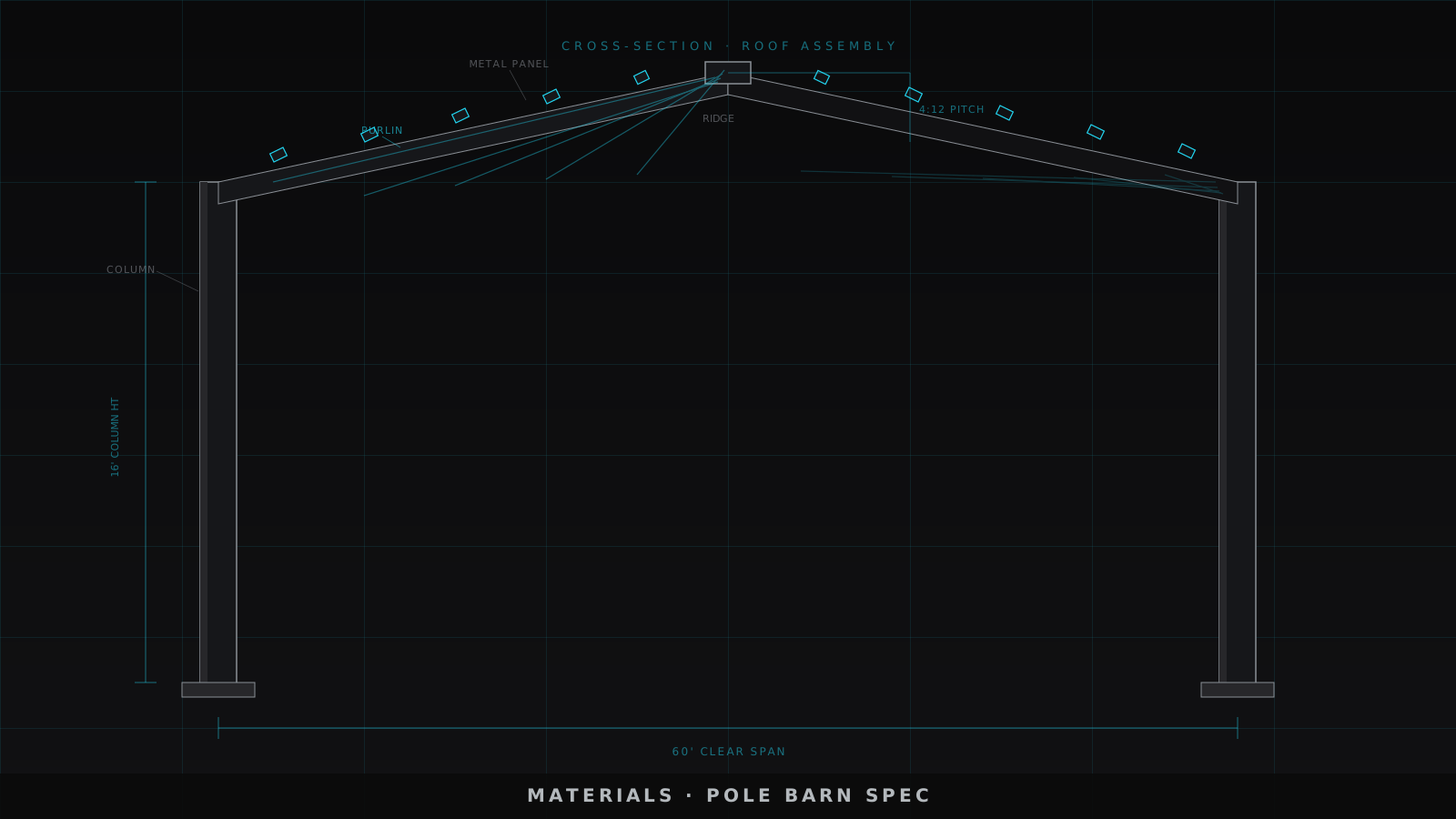
A 26-gauge R-panel roof installed without a vapor retarder in eastern Oklahoma will start condensing moisture on its underside within the first summer. That condensation drips, stains stored equipment, and accelerates corrosion at the panel seams and purlins from the inside out. It is one of the most common failures in Oklahoma barn and shop construction, and it is almost entirely preventable at the time of installation. Retrofitting a fix after the fact costs several times what it would have cost to do it right during the build.
Oklahoma’s humidity swings — bone dry in the panhandle, notably humid from Tulsa eastward through the hills — make condensation control a non-negotiable consideration for any enclosed or semi-conditioned ag building or shop. What follows covers the full roofing decision for pole barns in this region: panel types, gauges, fastener systems, condensation control, purlin spacing, and the failure modes that show up in older structures.
Panel Types: R-Panel, PBR, and Standing Seam
The three profiles that account for the majority of pole barn roofing in Oklahoma are R-panel, PBR panel, and standing seam. They are not interchangeable and each has a specific use case.
R-panel (also called 5-V or structural rib panel) uses a repeating rib pattern with 36-inch coverage width and exposed fasteners. It is the standard choice for agricultural buildings — hay storage, livestock shelters, open-sided equipment sheds — where budget efficiency is the primary driver. R-panel in 26-gauge is appropriate for purlins spaced at 4 feet or less. In 29-gauge, you need tighter purlin spacing or risk panel deflection under snow load and foot traffic.
PBR panel (Purlin Bearing Rib) is a structural improvement on R-panel. Its rib geometry is engineered for end-lap performance — two panels can overlap at a purlin location with better water resistance than a standard R-panel lap. PBR is the specification-grade choice for commercial and agricultural buildings where the engineer of record is involved. For most owner-builder shops in the 30x40 to 40x60 range, R-panel and PBR are functionally similar and priced comparably.
Standing seam is the correct choice when the building is being finished as a shop, garage, or equipment storage facility with a finished interior, conditioned or semi-conditioned space, or long-term investment expectations. Concealed fasteners eliminate the most common failure point in metal roofing — fastener pullout and washer degradation — and the floating panel design handles Oklahoma’s 100-plus-degree temperature swings without buckling or fastener elongation. Standing seam costs more to install on a post-frame structure, but the 40-plus-year service life changes the calculation for buildings that are worth maintaining.
For a detailed breakdown of metal roofing profiles for both barns and residential structures, see our metal roofing service page.
Gauge: What the Numbers Mean and What to Specify
Sheet metal gauge runs counterintuitively — lower number means thicker steel. The relevant range for pole barn roofing in Oklahoma:
- 29-gauge: Minimum acceptable for agricultural applications. Light, economical, and adequate for open structures with no foot traffic. Not recommended for buildings where anyone will walk the roof for maintenance.
- 26-gauge: The standard specification for most Oklahoma shops and commercial ag buildings. Significantly stiffer than 29-gauge, better dent resistance, and the appropriate weight class for buildings where snow load or hail is a concern.
- 24-gauge: The premium specification for standing seam and for buildings with long purlin spans. Required by most standing seam manufacturers to achieve their Class 4 hail impact rating. If the building will carry equipment or HVAC units on the roof, 24-gauge is the right choice.
For oklahoma panhandle locations near Woodward or Enid where heavier snow load events occur more frequently, 26-gauge minimum with engineered purlin spacing is the specification to use. Eastern Oklahoma near Tahlequah or Muskogee rarely sees significant snow load but sees far more wind and hail — the gauge selection stays the same, but the rib height and fastener pattern matter more.
Exposed vs. Concealed Fasteners: The Critical Decision Point
Every exposed fastener in a metal roof is a potential entry point for water. In agricultural buildings that are open-sided or minimally enclosed, this is an acceptable trade-off for cost. In any building that contains finished space, equipment, vehicles, or livestock feed, it becomes a long-term liability.
Exposed fastener systems (R-panel, PBR) use screws with neoprene or EPDM washers driven through the panel face. The washers compress to form a weather seal. Over 10–15 years in Oklahoma’s UV environment, those washers dry out, compress permanently, and begin to admit water at the fastener hole. Re-screwing with oversized fasteners or applying lap caulk extends the life, but the failure mode is inherent to the system.
Concealed fastener systems (standing seam, certain through-fastened systems with factory-cut clips) eliminate the panel penetration. Water has no fastener hole to find. The tradeoff is installation complexity and cost — standing seam requires more precise purlin spacing and more skilled installation.
The practical guideline: if the building’s contents are worth more than the cost difference between R-panel and standing seam, specify standing seam. If the building is a basic equipment shed or livestock structure, R-panel in 26-gauge properly lapped and fastened is the right answer.
Condensation Control: The Problem Most Installers Skip
This is where the majority of older Oklahoma pole barns fail. Metal panels conduct temperature readily. On a humid July morning after a cool night, the underside of an uninsulated metal roof panel can be 20 degrees cooler than the air inside the building. That temperature differential is enough to push interior air past its dew point and condense water on the steel — what farmers call “sweating” and what engineers call interstitial condensation.
The consequences:
- Moisture drips onto stored hay, equipment, and feed
- Corrosion develops at purlin contact points from the inside — invisible until panels start to fail
- Wood purlins and girts absorb moisture and develop rot at metal contact points
- Stored grain moisture content rises, reducing quality
There are three practical solutions for Oklahoma buildings, in order of effectiveness:
Closed-cell spray polyurethane foam applied to the underside of the panels after installation is the gold standard for enclosed shops and finished buildings. It adheres directly to the steel, eliminates the air gap that drives condensation, adds R-value (roughly R-6 per inch for closed-cell), and significantly stiffens the panel profile. The downside is cost — it runs more per square foot than other options. For shop interiors, the combination of vapor control and insulation value makes it the right answer. See our spray foam insulation service for how this integrates into barn and shop construction.
Bubble foil or reflective vapor barrier installed between the purlins and panels during construction is the most common condensation control measure in agricultural construction. It is effective when installed without gaps and with properly lapped seams. The failure mode is installation — gaps at purlin crossings and at eave lines create channels for condensation to bypass the barrier. It is the right choice for agricultural buildings on a budget when installed carefully.
Vented ridge and eave systems address condensation by moving air through the building before it reaches the dew point on the panels. Effective in open-sided structures but limited in enclosed shops where the volume of conditioned or semi-conditioned air creates a persistent dew point risk.
Purlin Spacing and Span Considerations
Purlin spacing is an engineering question, not a preference. The correct specification depends on:
- Panel gauge and profile (rib height affects allowable span)
- Design snow load for the building’s location (Oklahoma ranges from 10 psf in the southwest to 20 psf in the northeast)
- Wind uplift requirements (Oklahoma’s exposure category and basic wind speed by county)
- Whether the roof is walk-able for maintenance
Common failure mode in owner-built Oklahoma barns: 29-gauge R-panel on 5-foot purlin spacing. The panel spans the distance adequately under normal load, but a moderate snow event or two workers standing on the roof simultaneously creates enough deflection to stress the lap joints and expose fastener holes to standing water. The repair is adding intermediate purlins — expensive after the panels are on.
Standard specification for most 30x60 to 40x80 Oklahoma shops: 26-gauge R-panel or PBR on 4-foot purlin spacing. For standing seam: follow the manufacturer’s span tables, which are specific to panel profile and gauge combination. For any building over 60 feet wide or in a snow load zone, an engineer’s stamp is worth the cost.
Common Failure Modes in Older Oklahoma Barns
If you’re re-roofing an existing structure rather than building new, here are the failure patterns to look for before specifying replacement panels:
- Purlin rot at panel contact points — common in buildings without vapor barriers where moisture wicked into wood purlins for years. Replacement panels won’t fix this; the purlins need to be evaluated and replaced as needed.
- Fastener hole enlargement — over years of thermal cycling, the steel around exposed fastener holes can elongate and loosen. Re-roofing over existing panels without addressing this creates a leak-prone sandwich.
- Ridge cap deterioration — exposed-fastener ridge caps on older R-panel buildings frequently outlast their neoprene washer life. Ridge caps are the highest-exposure location on any roof and the first place to check on a building over 15 years old.
- Panel-to-panel lap corrosion — when laps are not properly caulked or are factory-striped with mastic that has dried out, water wicks into the lap by capillary action and corrodes both panels at the joint from the inside.
For re-roofing jobs, a full purlin inspection before any panels are ordered is non-negotiable. Putting new steel on compromised framing is the costliest mistake in pole barn roofing.
Our barns and pole buildings service covers new construction and re-roofing on existing structures across Oklahoma. When a project involves new construction or significant structural work alongside the roofing, our general construction team handles the full scope.
Aero Precision Roofing works on pole barns, hobby shops, ag buildings, and commercial shops across the Oklahoma service area, from the Tulsa metro into the surrounding rural counties. We inspect existing structures, spec replacement panels, and install condensation control as part of the roofing scope — not as an afterthought.
Contact us for a barn roofing consultation and we’ll come out, walk the structure, and give you a straight assessment of what the building needs.